CreditMarket noteFriday 16 October 2026, 09:20
Thames Water asks creditors for £2.4bn more to last into autumn 2027
Thames Water's emergency money runs out around the new year. It wants creditors to lift its super senior loan from £3bn to £5.4bn. They vote by 29 October.
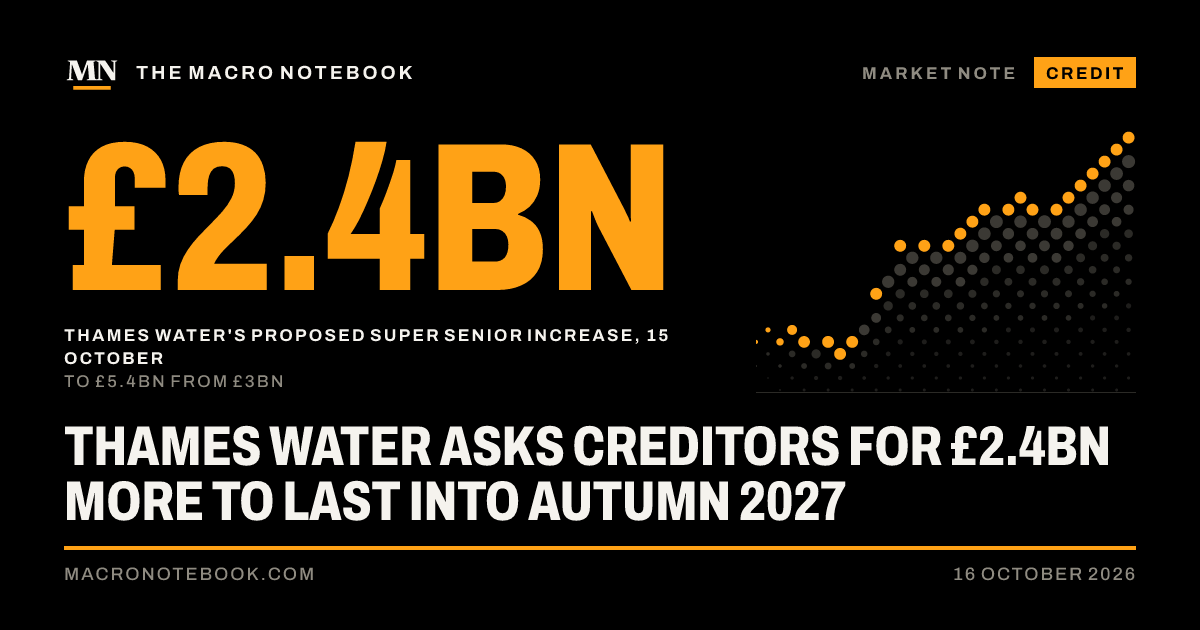
Thames Water has asked its creditors for up to £2.4bn more, because the emergency money it already has will run out around the turn of the year. Britain’s largest water company wants to raise its super senior loan facility from £3bn to £5.4bn, which would keep it funded into autumn 2027, Thames Water said on Thursday. Creditors vote by 29 October.
The company has drawn £2.65bn of the £3bn so far. On its latest forecast, the facility provides cash until the end of 2026 or the start of 2027. Thames does not expect to finish its recapitalisation, the court-approved restructuring meant to fix its balance sheet, before then.
What Thames Water is asking for
The request has three parts. The first is money now. Creditors are asked to waive conditions that have not been met, so that £350m of commitments already promised can be drawn.
The second is more time. Under the current terms, Thames must have a lock-up agreement backed by creditors for its second restructuring plan by 31 October before more money is released. It wants that deadline moved to 30 November. If creditors agree, it can draw another £350m in November.
The third is the increase itself. A new company, Thames Water Super Senior Upsize Issuer, would join the facility as a lender and raise the extra £2.4bn through loans and bonds. It would rank equally with the existing super senior debt. Thames would seek the commitments in tranches over the coming months, and each drawdown would need creditor consent at the time.
These are the company’s 16th set of consent requests. Creditors approved all 15 before them. Voting can close early if enough creditors agree before 29 October.
A water company that spends more cash than it makes
The need for more money shows in the company’s own accounts. In the year to 31 March 2026, Thames spent £1,129m more in cash than it generated before financing, 20% more than a year earlier, its annual report shows. Higher debt and higher interest rates both added to the gap.
Creditors filled it. They provided £1,570m of new debt in the year, against £1,083m the year before. No dividends were paid. Net debt on the covenant basis rose by £2,047m to £19,772m.
That debt sits against a business whose value is set by the regulator. Senior gearing, the ratio of senior net debt to the regulatory capital value, rose from 84.4% to 86.1%.
The ratings agencies put the older debt far below investment grade. Moody’s rates the Class A bonds Ca and the Class B bonds C. S&P rates them CCC and CC, both with a negative outlook. Only the newer super senior debt holds a higher rating, B2 from Moody’s.
Why super senior debt matters
Super senior lenders are paid back before everyone else, including the holders of Class A and Class B bonds, who lent before the crisis. Each extra pound of super senior debt pushes the older bonds further back in the queue if the company fails.
The directors see a material uncertainty over whether Thames can extend its cash runway long enough to complete the recapitalisation. If it cannot, a possible result is special administration under the Water Industry Act 1991, the report says. The super senior loans are what keep that option off the table for now. They also mean that the longer the talks run, the more of the company’s value is owed to its newest lenders. Thames spent £2.7bn on investment last year, 20% more than the year before. Each month of delay adds to the bill that the new money must cover.
The increase would come in tranches, not as one cheque. The company would ask for commitments over the coming months and could draw them only with consent each time. That gives creditors a say at every step, and it keeps the pressure on Thames to agree the second restructuring plan.
What to watch next
The vote on the 16th consent requests closes on 29 October, or earlier if enough creditors agree. The deadline for a creditor-backed lock-up agreement falls two days later, on 31 October, unless creditors move it to 30 November.
Those two dates decide whether Thames gets £700m of cash in October and November. The larger £2.4bn increase is a matter for the months after. Without it, on the company’s own forecast, the money runs out in about three months.
Disclosure
This is analysis and opinion, not investment advice.
WeeklyThe Notebook by email
The week, in one email
Once a week: the stories we published, and the releases and decisions due in the week ahead. Free. One click stops it.
We email you a link to confirm. By signing up, you agree to the Terms and the Privacy policy.
Check your email. We sent a link to . Open it within 15 minutes to confirm.
You are signed in as . You can change this on your Saved page.
You get the weekly email. To stop it, use the link at the end of any of them, or your Saved page.