PolicyMarket noteFriday 16 October 2026, 09:22
UK bank tax rise expected in the Budget, as banks paid £39.1bn last year
Bank executives expect a bank tax rise in Healey's Budget on 28 October. UK banks paid £39.1bn in tax last year. The surcharge on profits is 3%, down from 8%.
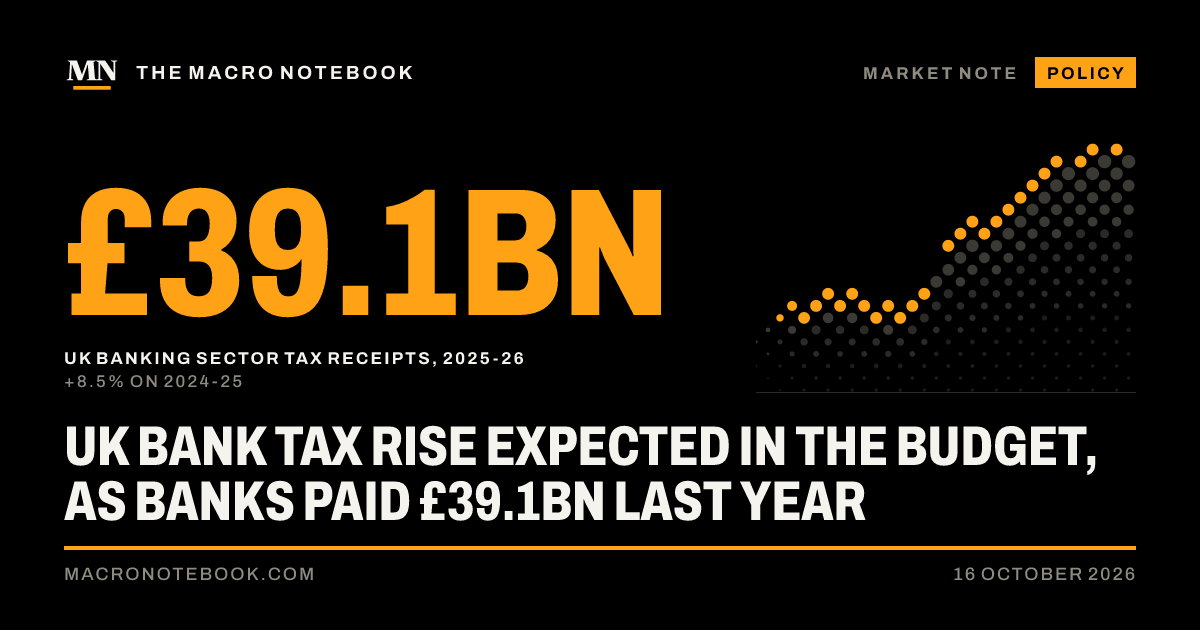
A UK bank tax rise is now expected in the Budget. Chancellor John Healey plans to raise taxes on the banking sector, senior bank executives told the BBC on Friday, and shares in Lloyds and NatWest fell on the news. The Treasury said decisions on tax are set out at fiscal events, not in comment on speculation.
The sector already pays a lot. Banks paid £39.1bn in income tax, national insurance, corporation tax and bank-specific taxes in the year to March 2026, £3.1bn or 8.5% more than a year earlier, HMRC’s annual figures show. The question for the Budget is which part of that bill Healey raises.
What banks pay now
Most of the £39.1bn is not tax on profits. Pay as you earn income tax and national insurance on bank staff brought in £26.8bn, up 9.8%, partly because employer national insurance rose in April 2025. Corporation tax on bank profits brought in £9.7bn, up 3.7%.
Two taxes fall on banks alone. The Bank Levy, a charge on the liabilities and equity on their balance sheets, raised £1.4bn, up 9.3%. The Bank Surcharge, an extra charge on profits, raised £1.2bn, up 20.1% as taxable profits rose. Together the two bank-only taxes brought in £2.6bn, about 7% of the sector’s total.
The surcharge was cut in April 2023. Since then, banks pay 3% on profits above £100m a year, on top of corporation tax at 25%. Before, they paid 8% on profits above £25m, on top of corporation tax at 19%, HMRC’s notes on the rates show. The Bank Levy has charged 0.10% on short-term liabilities and 0.05% on long-term ones since 2021.
The options on Healey’s desk
The BBC reports three options. The first is to reverse the 2023 cut and take the surcharge back towards 8%. Critics of that idea say the cut came with a corporation tax rise from 19% to 25%. On those rates, the combined charge on large bank profits went from 27% to 28%, not down.
As a rough guide, each point of surcharge raised about £0.4bn last year, by our calculation from HMRC’s figures: £1.2bn at a 3% rate. On that basis, with profits and the £100m allowance unchanged, a return to 8% would add about £2bn a year.
The second option is a higher Bank Levy. The third, discussed with Treasury officials according to the BBC, is a pause of a few years on banks’ use of past losses to cut their tax bills. Lloyds in particular still offsets losses from the financial crisis. Analysts and bank executives who back the idea put the gain at about £1bn a year, and one executive called it far more bearable.
Why banks are in the frame
Banks have done well from higher interest rates. Bank Rate is 3.75%, and markets put the chance of a quarter-point rise on 5 November at 94%, on prices at the close on 15 October, Central Bank Watch calculates. Higher rates widen the gap between what banks charge borrowers and what they pay savers.
The Budget has a gap to fill. As we reported on 12 October, the IFS says Healey faces a choice worth £35bn of tax rises or spending cuts. Bank profits are an obvious place to look, and the TUC has called for banks to pay more.
The industry argues the other way. UK Finance, the banks’ trade body, told the BBC that further increases in bank taxes would weaken competitiveness and discourage investment. Foreign banks with big London operations, such as JP Morgan, warn that the UK already taxes banks more heavily than most places.
What to watch next
Healey delivers the Budget on 28 October, with a new forecast from the Office for Budget Responsibility, the Treasury told MPs in July. The Bank of England decides on rates eight days later, on 5 November. A rise there would widen bank margins further.
The detail matters as much as the headline. A pause on loss relief would fall hardest on banks still carrying losses from the financial crisis, and would spare foreign banks, the BBC notes. Industry leaders say a rise that hits UK banks but not foreign banks’ UK operations would sit badly with the government’s push to back British business.
Disclosure
This is analysis and opinion, not investment advice.
WeeklyThe Notebook by email
The week, in one email
Once a week: the stories we published, and the releases and decisions due in the week ahead. Free. One click stops it.
We email you a link to confirm. By signing up, you agree to the Terms and the Privacy policy.
Check your email. We sent a link to . Open it within 15 minutes to confirm.
You are signed in as . You can change this on your Saved page.
You get the weekly email. To stop it, use the link at the end of any of them, or your Saved page.