RatesMarket noteFriday 16 October 2026, 09:25
PPI: US producer prices rose 1.3% in September, the most since 2022
The US PPI rose 1.3% in September, the biggest monthly rise since March 2022, as energy jumped 10.8%. Core producer prices rose 0.7%, and Fed hike odds rose.
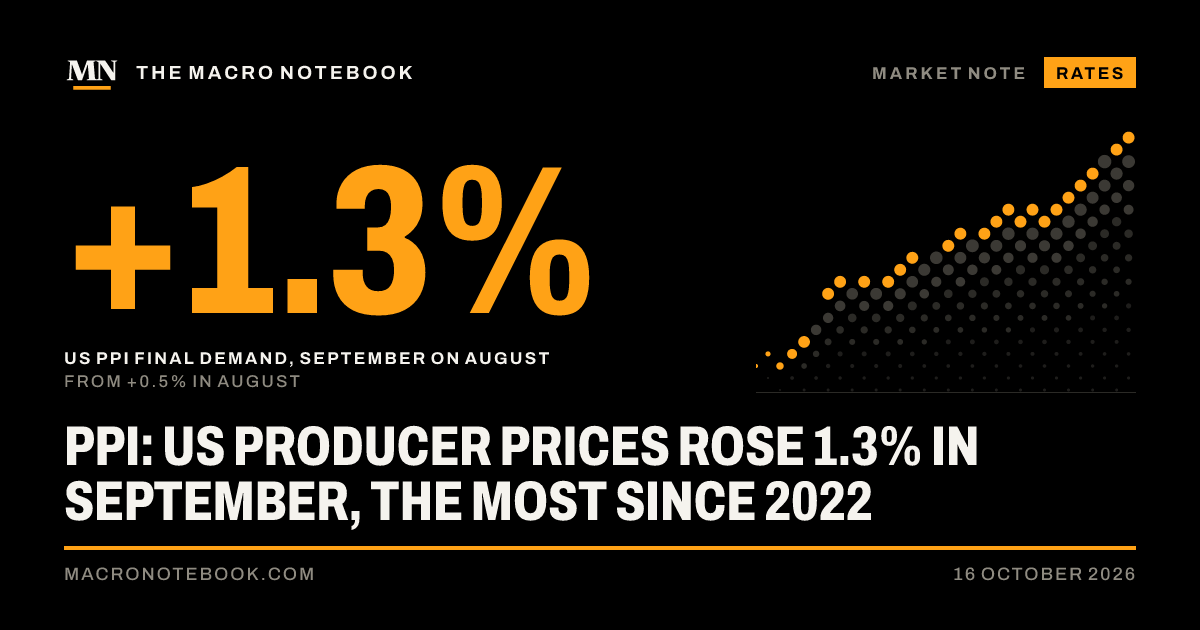
US producer prices rose 1.3% in September, the biggest monthly rise in the PPI since March 2022. The producer price index for final demand, which tracks what businesses receive for their goods and services, followed a 0.5% rise in August, Bureau of Labor Statistics data published on Thursday show.
On a year earlier, producer prices were 6.3% higher, up from 5.6% in August, the unadjusted index shows. That is the fastest annual rate since December 2022. The report came a day after a hot consumer price report, and it adds to the case for another Fed rate rise.
Energy drove the PPI jump
Energy did most of the work. Final demand energy prices rose 10.8% in the month, the seasonally adjusted series shows, and were 35.4% higher than a year earlier, on the unadjusted index.
Goods prices as a whole rose 2.6%, the goods index shows. Food prices rose 1.2%, the foods index shows, after a fall in August. Services rose 0.8%, the services index shows, their fastest rise since January.
Core PPI rose 0.7%
Core producer prices, which leave out foods and energy, rose 0.7% in September after 0.2% in August, the core index shows. Only January was higher this year, and April matched it. Over twelve months, core PPI rose 5.0%, on the unadjusted core index, its highest rate since January 2023.
The core figure matters more for the Fed than the headline. Energy prices swing with oil, and the Fed tends to look through them. A 0.7% rise in prices outside energy and food suggests that the pressure is not only about fuel.
Producer prices also feed into the Fed’s preferred inflation gauge, the personal consumption expenditures (PCE) price index. Several of its parts, such as airfares, medical care and fees for managing investments, come from the PPI and not from consumer prices.
What the PPI means for the Fed
Consumer prices tell the same story. The consumer price index was 4.0% higher in September than a year earlier, BLS data show, and core consumer prices rose 0.3% in the month, on the core index. As we wrote on 14 October, a core reading of 0.3% or more would make a December rise look close to certain.
Markets now put the chance of a Fed rate rise on 28 October at 28%, up from 26% a day earlier on the same measure, based on prices at the close on 15 October, Central Bank Watch calculates. The chance of a higher rate by the meeting on 9 December is about 90%. In all, futures price 76bp of rises over the next nine meetings.
The Fed raised its target range to 3.75% to 4.00% on 16 September, its statement said. Bond yields fell on the day of the PPI report anyway. The 2-year Treasury yield, which follows Fed expectations closely, closed at 4.77%, down 5bp, and the 10-year at 5.10%, down 9bp, the Treasury’s daily curve shows.
Retail sales held up
Shoppers kept spending. US retail sales rose 0.8% in September to $745.0bn, the Census Bureau said on Thursday, and August’s rise was revised up to 1.3%. Sales were 6.3% higher than a year earlier. These figures are not adjusted for prices. Consumer prices rose 0.6% in the month, the seasonally adjusted index shows, so much of September’s gain reflects higher prices rather than more goods sold.
Strong spending and rising prices together leave the Fed little reason to wait. Weak hiring is the main argument the other way, as we reported on 2 October.
What to watch next
The Fed’s next decision comes on 28 October. The day after, on 29 October, the Bureau of Economic Analysis publishes both the first estimate of third-quarter GDP and personal income and outlays for September, its release schedule shows. That report contains the PCE price index, where the PPI’s September jump will show up first.
Disclosure
This is analysis and opinion, not investment advice.
WeeklyThe Notebook by email
The week, in one email
Once a week: the stories we published, and the releases and decisions due in the week ahead. Free. One click stops it.
We email you a link to confirm. By signing up, you agree to the Terms and the Privacy policy.
Check your email. We sent a link to . Open it within 15 minutes to confirm.
You are signed in as . You can change this on your Saved page.
You get the weekly email. To stop it, use the link at the end of any of them, or your Saved page.